
The CTRG conducts high impact research studies with the specific goal of saving lives on the battlefield.
With a focus on the resuscitation and stabilization of combat casualties, from frontline points of care through definitive surgical capability, the CTRG conducts primary and pre-clinical research for the development and optimization of advanced therapeutics and drug products as well as product evaluation to improve survivability of expeditionary warfighters.
Our Mission...
CTRG focuses on evaluating problems and knowledge gaps centered on Tactical Combat Casualty Care (TCCC). One unique aspect of CTRG is that nearly 100% of its membership are full time clinical faculty, most of its members having had recent and extensive operational experience, giving them direct insight into issues facing casualty care. The staffs’ deployments have generated research questions and protocol topics which include hemostatic gauzes, artificial hemoglobin, field tourniquets, tension pneumothorax decompression devices, chest seals, cricothyrotomy technique comparisons, Tranexamic Acid, Terlipressin, fresh-frozen plasma, and other resuscitative measures. The group’s findings have directly influenced and supported changes to the Committee on TCCC’s official guidelines. CTRG’s research allows our Residents and Staff to have a direct and meaningful impact on pre-hospital, enroute, and in-hospital military medicine.
CTRG’s interdisciplinary approach allows residents and staff to collaborate with pre-hospital providers and other medical specialties, laying the foundation for the team dynamics that are critical in the deployed setting. These also provide individuals with leadership experience, as well as greater exposure to academic medicine, research opportunities and institutional knowledge. Resident members graduate as subject matter experts regarding TCCC and Joint Trauma System Clinical Practise Guidelines.

Our Story…
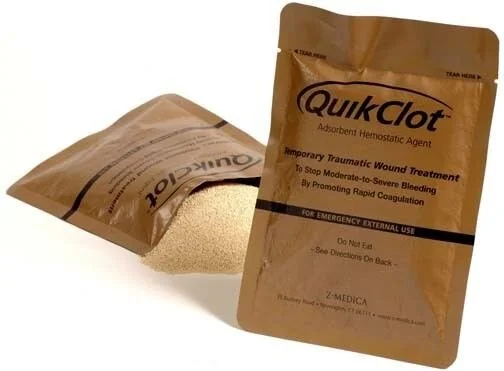
The CTRG originated in 2004 from a pilot study by Dr. Jose Henao, who studied how treatment with the exothermic first-generation hemostatic agent QuikClot damaged healthy tissue in combat wounds. Although this study was unpublished, it spurred excitement from several members of the Emergency Medicine Department, leading to a follow-up study by Dr. Buddy Kozen, which was published in Academic Emergency Medicine. The group was originally called the Hemostatic Agent Working Group (HAWG) and included three members: one ER staff member, one resident per year, and one lab assistant. In 2007, HAWG expanded their research scope and rebranded as the Combat Trauma Research Group.
A Tradition of Excellence…
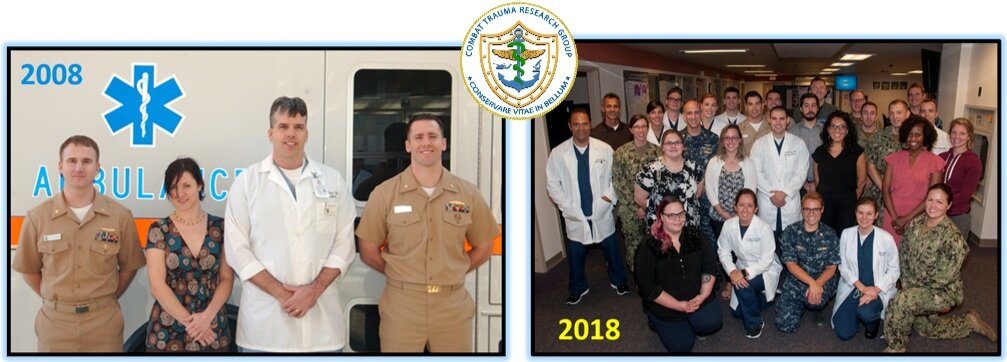
The Combat Trauma Research Group (CTRG) at Naval Medical Center Portsmouth is a multidisciplinary research collaborative dedicated to advancing combat casualty care, far-forward resuscitation, and operational medical readiness. Built within the Department of Emergency Medicine, CTRG brings together military physicians, residents, researchers, and research support staff to develop practical, battlefield-relevant solutions for injured service members in austere and deployed environments.
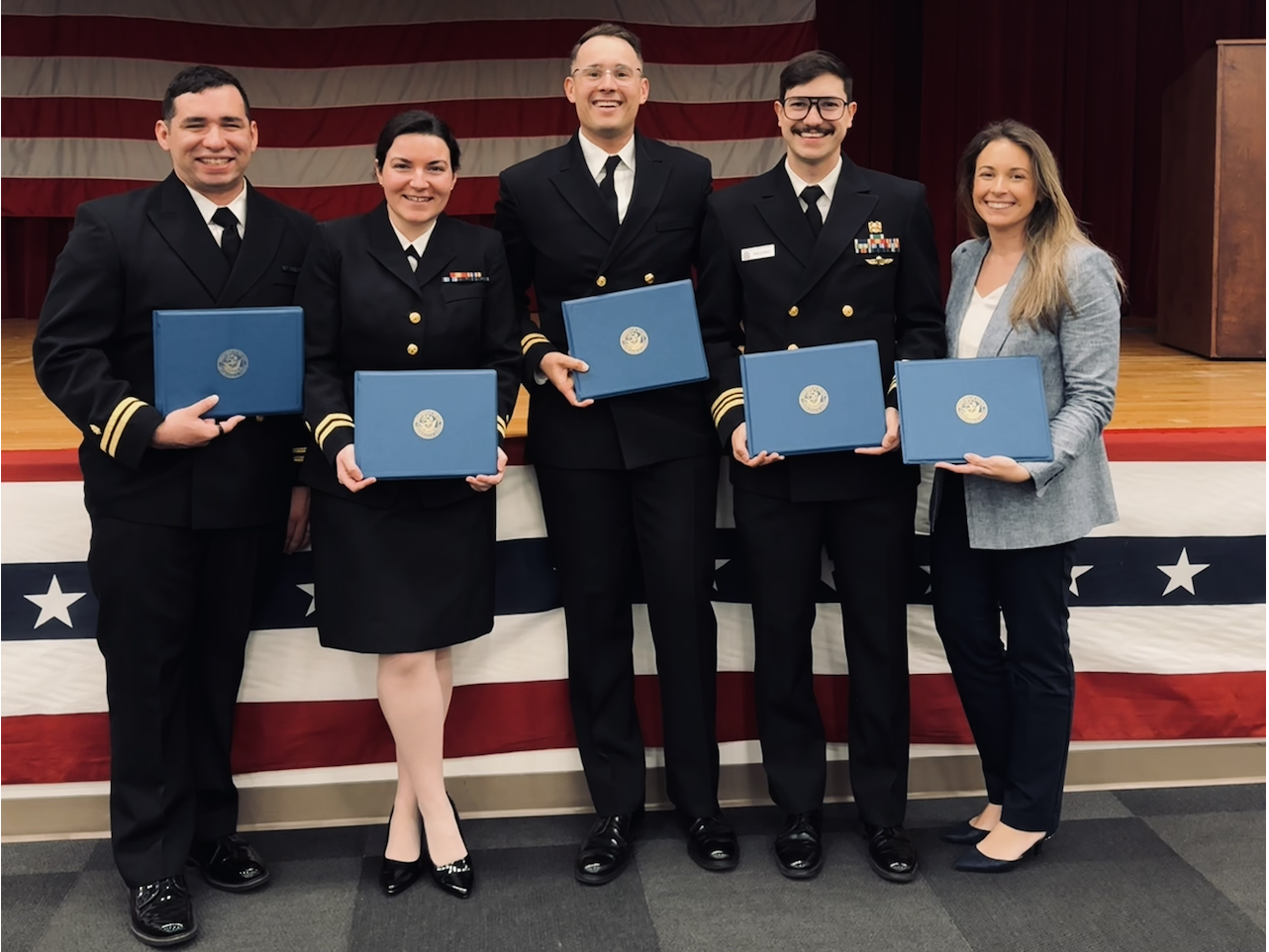
CTRG has a long history of academic excellence and mission-driven innovation. In 2016, the team earned 6 of 11 Navy Medicine East Academic Research Awards, helping transform the research culture at Naval Medical Center Portsmouth. That same year, Dr. Sean Stuart won 2nd place for Resident Research at the American Academy of Emergency Medicine annual conference, and CTRG received the Defense Health Agency Award for Research Accomplishment in the Large Team category, the highest medical research award offered in the U.S. military.
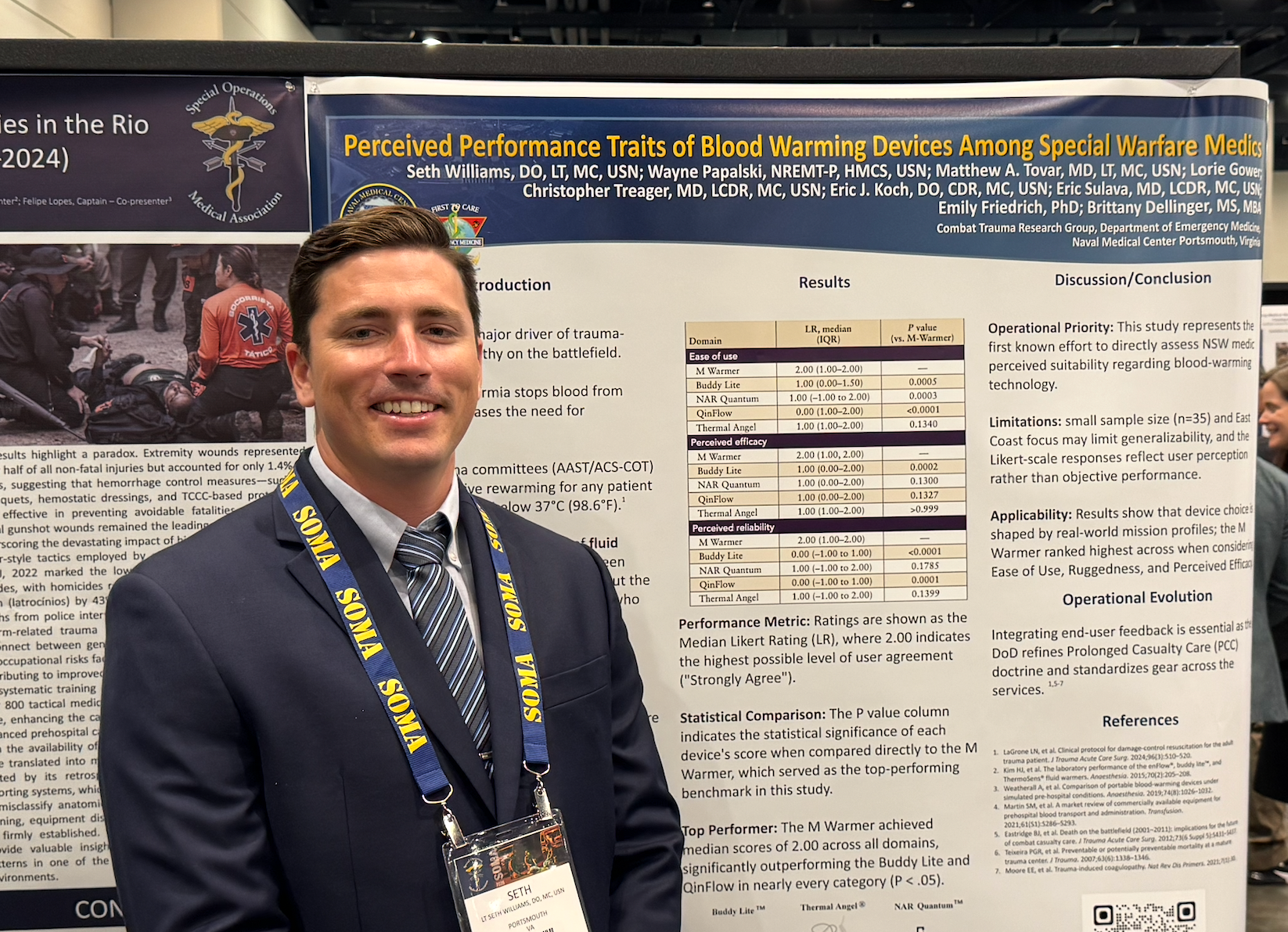
The group continued this momentum in subsequent years, with Dr. Taylor George earning 1st place for resident research at both the command and Navy-wide competitions, and CTRG winning the majority of Navy Medicine East Academic Research Competition awards in 2019, along with both Navy-wide Staff and Resident Research Awards. Dr. Eric Sulava also won 1st place for Resident Research at the American College of Emergency Physicians Scientific Assembly.
Since 2020, CTRG has expanded its research portfolio across hemorrhage control, transfusion medicine, vascular access, blood warming, ultrasound-guided resuscitation, tranexamic acid pharmacokinetics, trauma-induced coagulopathy, and corpsman trauma education. Recent CTRG work has been published in journals including Military Medicine, Journal of Special Operations Medicine, Prehospital Emergency Care, Journal of Surgical Research, and Journal of Trauma and Acute Care Surgery.
The Next Chapter…
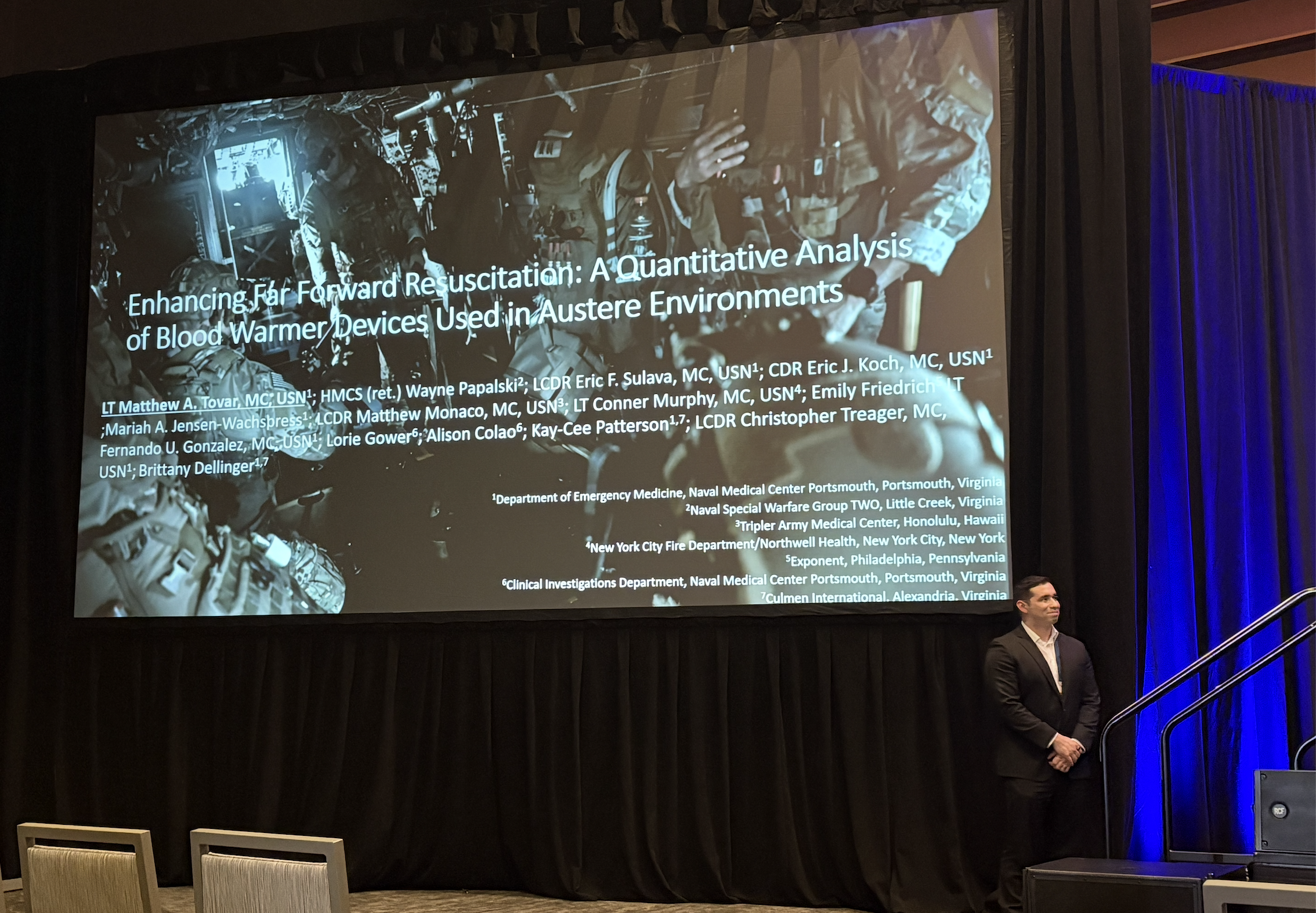
The Combat Trauma Research Group continues to grow in both scope and impact, expanding multi-institutional collaborations with military, civilian academic, operational, and industry partners to advance its mission of preserving life on the battlefield.
CTRG’s current portfolio spans far-forward resuscitation, hemorrhage control, transfusion medicine, blood warming, vascular access, tranexamic acid delivery, trauma-induced coagulopathy, device assessment, and end-user training. The group remains focused on translational research models, operationally relevant device and therapeutic evaluation, and training protocols that improve the readiness of frontline medical personnel.
CTRG draws research questions directly from operational units, emerging battlefield requirements, and capability gaps identified by the Committee on Tactical Combat Casualty Care and other military medicine working groups. Through a multidisciplinary team of critical wartime specialties, CTRG continues to pursue the goal that has guided the group since its earliest pilot studies: to protect, enhance, and restore the health and safety of America’s warfighters.